Our journal is written in French — English translations are on the way.
Save the Queen!: the Florentine label, its history and how to spot a vintage piece
Born in Florence in the mid-1980s, Save the Queen! built its name on hand-drawn prints, embroidery and sheer layers, all made in Italy. Its history, its signature, the pieces to look for and how to recognise an authentic piece.
Some labels you can spot from across the rail: a printed tulle layering florals over paisley, a knit where three yarns meet, ribbon embroidery running down a maxi dress. Save the Queen! is one of them. Little known to the general public in France, this Florentine house dressed a whole generation of women who loved clothes that look like nothing else. At The Vintage Digger we see its pieces come through regularly, and we are always glad to keep them. Here is what you need to know about the label, what makes it recognisable, and how to find your way when you are hunting for a vintage piece.
A family business born in Florence
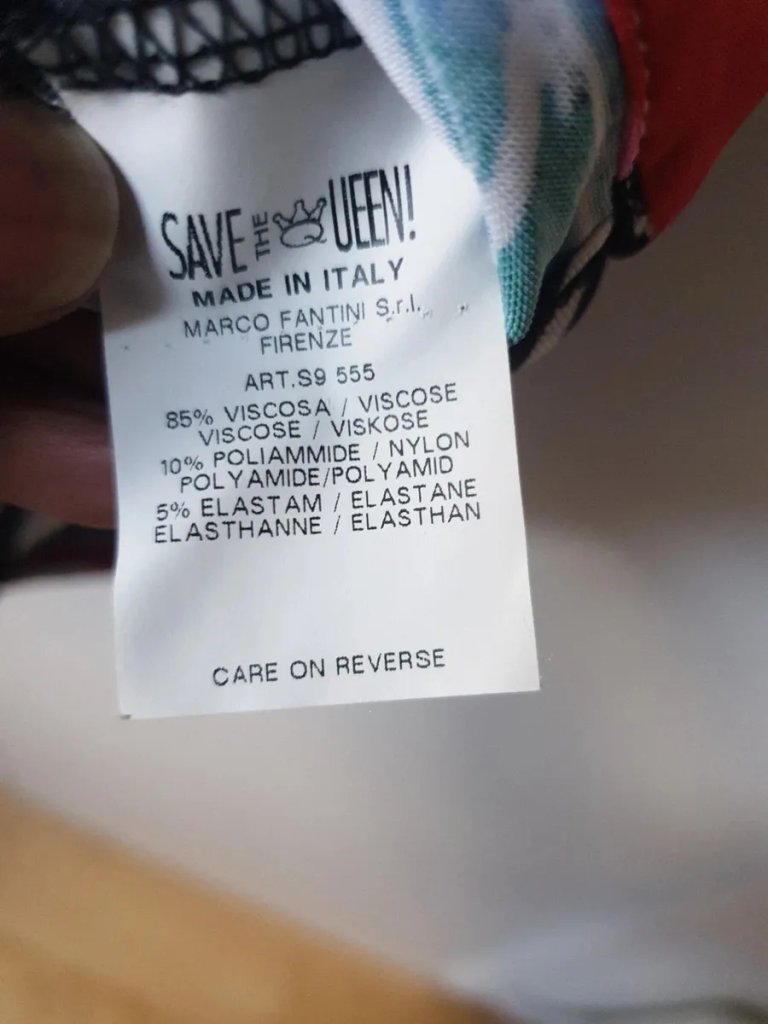
Save the Queen! belongs to the company Marco Fantini srl. According to the company’s own presentation, it was founded in Florence in 1985 by entrepreneur Marco Fantini and his wife Elena, described as the creative soul of the house. FashionNetwork, in a 2010 article, also dates the launch of the label to 1985. The company is now based in Campi Bisenzio, just outside Florence.
Over more than thirty years, the company has created several labels: LE GATTE, OHDD and SAVE THE QUEEN!, with secondary lines such as Save the Queen! Sun and Save the Queen! Moon. Its online shop also features a menswear line, StQ MAN, and a line called Crown. All production is presented as 100% Made in Italy: Italian raw materials and every manufacturing step carried out in Italy. The company says around 80% of its output is exported.
In Florence, the label opened a boutique in April 2007 in Palazzo Corsi, on via de’ Tornabuoni, the city’s most elegant street: a space restored to reveal its vaults, stucco and coffered ceilings, designed to feel like an art gallery. In 2010, FashionNetwork mentioned a Paris boutique on boulevard Saint-Germain, as well as addresses in Rome, Florence, Forte dei Marmi and Dubai, on top of wide distribution through multi-brand stores.
The Save the Queen! signature: “Art to Wear”
The house sums up its approach in three words: “Art to Wear”. In practice, this means a few constants you find from one collection to the next.
- Hand-drawn prints. Each collection is built on exclusive designs. The company says its fabrics are printed in the Como area, the heart of Italian textile printing, in fifteen colours and as placed panels: the motif is composed for the garment rather than simply cut from a length of fabric.
- Hand embroidery. The company says it embroiders by hand on Cornely machines, using almost any yarn: wools, chenilles, raffia, satin or velvet ribbons, sometimes with small ornaments added by hand.
- Mixed materials and patterns. Florals, paisleys, chevrons, ethnic motifs, polka dots, sequins: the label has never been afraid to put several on the same piece.
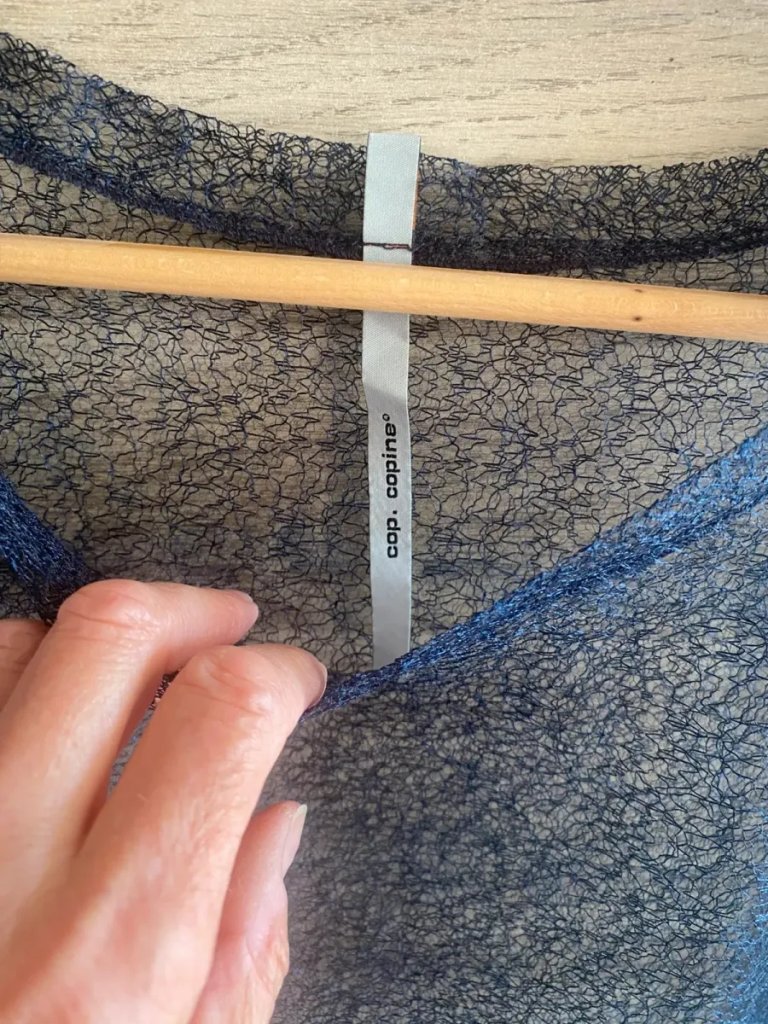
- Sheer effects. Tulle, mesh, fine knits: in 2010, FashionNetwork described the label’s spirit as bold and feminine, playing with transparency and texture.
The result swings between romantic and eccentric. On the pieces we see, there is a clear bohemian streak (maxi dresses, embroidery, ribbons) and a more rock one (mesh, layering, asymmetric cuts). It is not an official label from the house, but it is often what wins our customers over.
The pieces to look for
Printed tulle and mesh dresses and tops
These are the most sought-after pieces on the second-hand market. Printed stretch tulle, often lined or made for layering, in midi or maxi length: resellers frequently list them as “Y2K”, meaning they place them in the early 2000s. Wear them on their own in summer or over a black camisole.
Embroidered maxi dresses
Multicoloured summer dresses enhanced with embroidery, beads or ribbons: this is the label’s most bohemian side, and the one where the handwork shows best.
Knitwear
Jumpers, cardigans and tops in mixed knits, assembled from panels of contrasting colours and patterns, sometimes asymmetric. These pieces age beautifully and work with a simple pair of jeans.
Save the Queen! Moon homewear
According to FashionNetwork, the Moon line was the label’s first homewear collection, arriving in stores in 2010: slips, bodysuits, camisoles, pyjamas and negligees playing on sheerness. They are rarer to find, and some look great outside the house too.
Recognising an authentic piece and placing it in time
Let us be honest: as far as we know, there is no official guide to Save the Queen! labels that would let you date a piece to the year. Here are the markers we use, offered for what they are.
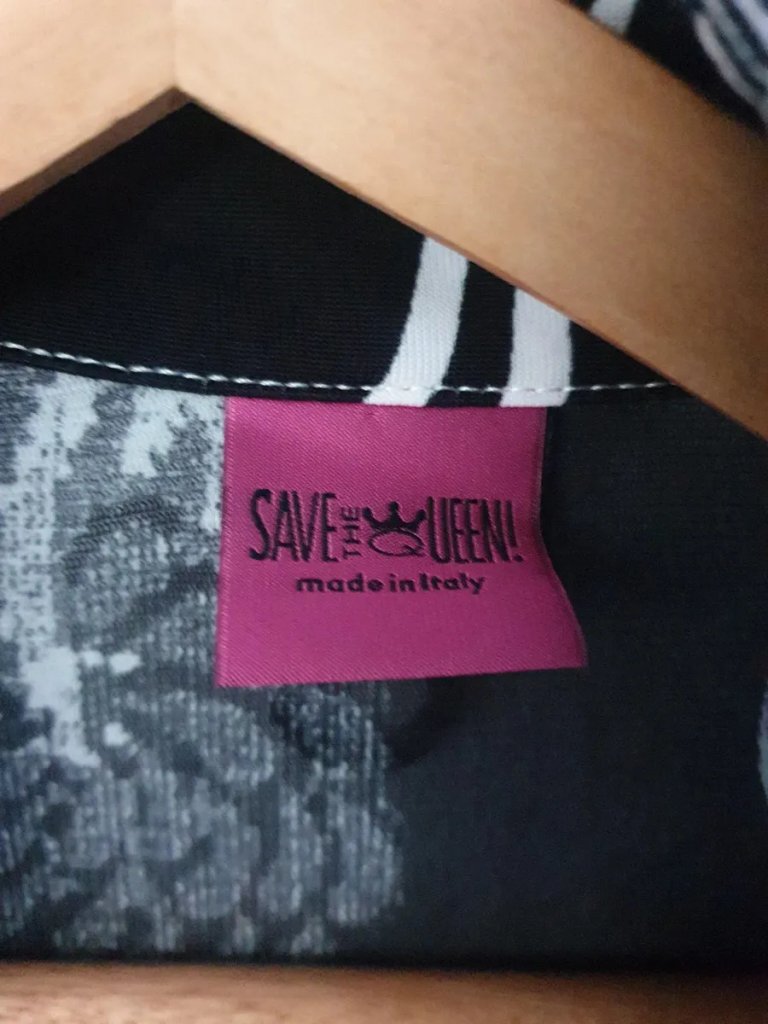
- The exact name. The label is written with an exclamation mark: Save the Queen!. A “God Save the Queen” label points to something else entirely (see the FAQ).
- Italian manufacturing. The house claims fully Italian production: a piece sold as Save the Queen! but made elsewhere deserves a careful check.
- The line shown. Mentions such as Sun, Moon, StQ MAN, or the company’s other labels (Le Gatte, OHDD) tell you which family the piece belongs to. Moon, for example, is the homewear line, launched in 2010 according to the trade press.
- The “Art to Wear” motto. Used by the house to describe its collections, it appears in many resale listings alongside the label.
- The quality of execution. A crisply placed print, even embroidery, securely attached ribbons, clean inside finishes: this is what sets a piece from the house apart from an imitation inspired by its style.
To place a piece in time, the style does most of the talking: printed tulles, layering and asymmetric cuts are generally associated by the second-hand market with the 2000s. We prefer to say “late 1990s to 2000s” rather than claim a precise year that nothing can prove. And remember that the label is still going: a recent piece can look very much like an older one.
Care
Save the Queen! pieces often combine several materials in one garment, with sewn-on ornaments. Always follow the care label. Failing that, we recommend hand washing in cold water or dry cleaning for anything embroidered, beaded or trimmed with ribbons, drying flat, and ironing at low heat on the reverse, never directly on embroidery or sequins. Fold tulle and mesh rather than hanging them, so they keep their shape.
FAQ
Is Save the Queen! a British brand?
No. Despite its name, Save the Queen! is an Italian label, founded in Florence in 1985 within the company Marco Fantini srl, and made in Italy.
Is it connected to Alexander McQueen or the Sex Pistols?
Not at all. The Sex Pistols’ “God Save the Queen” (1977) and Alexander McQueen’s autumn-winter 2008 collection, often referred to by the same name, have nothing to do with the Florentine house. It is a common mix-up in searches and listings: check the exact name on the label.
How does Save the Queen! fit?
Sizes are usually given in Italian sizing or in letters. Many tulle and knit pieces are stretchy and a little forgiving, but cuts vary a lot from piece to piece: rely on flat measurements rather than the size on the label.
Discover our vintage pieces
Pieces from this story
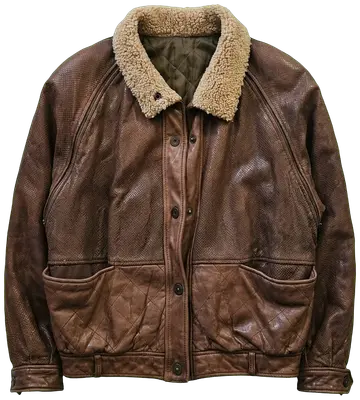 Image generated from the photo — the real photos are on the product page
VFORTI
Cappotto vintage
€320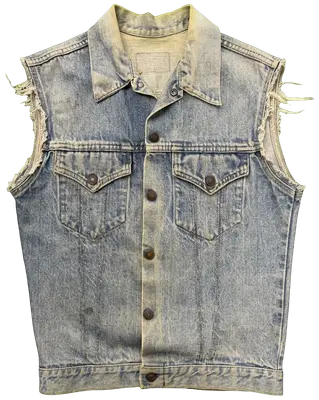 Image generated from the photo — the real photos are on the product page
Levi's
Faded sleeveless denim jacket with frayed edges
€110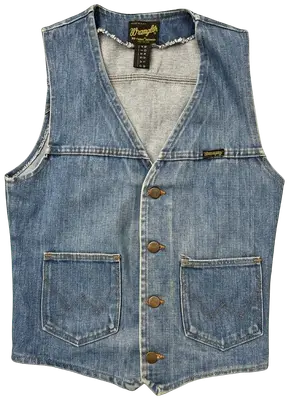 Image generated from the photo — the real photos are on the product page
Wrangler
Vintage light blue Wrangler denim vest from the No-Fault Denims line
€110Read next
Discover our vintage pieces
View shop