Our journal is written in French — English translations are on the way.
Le Gatte, or Legatte Jeans: the Florentine label behind the printed dresses
A « Le Gatte Jeans » or « Legatte » label inside a printed mesh dress? It’s a brand from Marco Fantini srl, the Florentine house behind Save The Queen! What we know, what we observe, and how to recognise it.
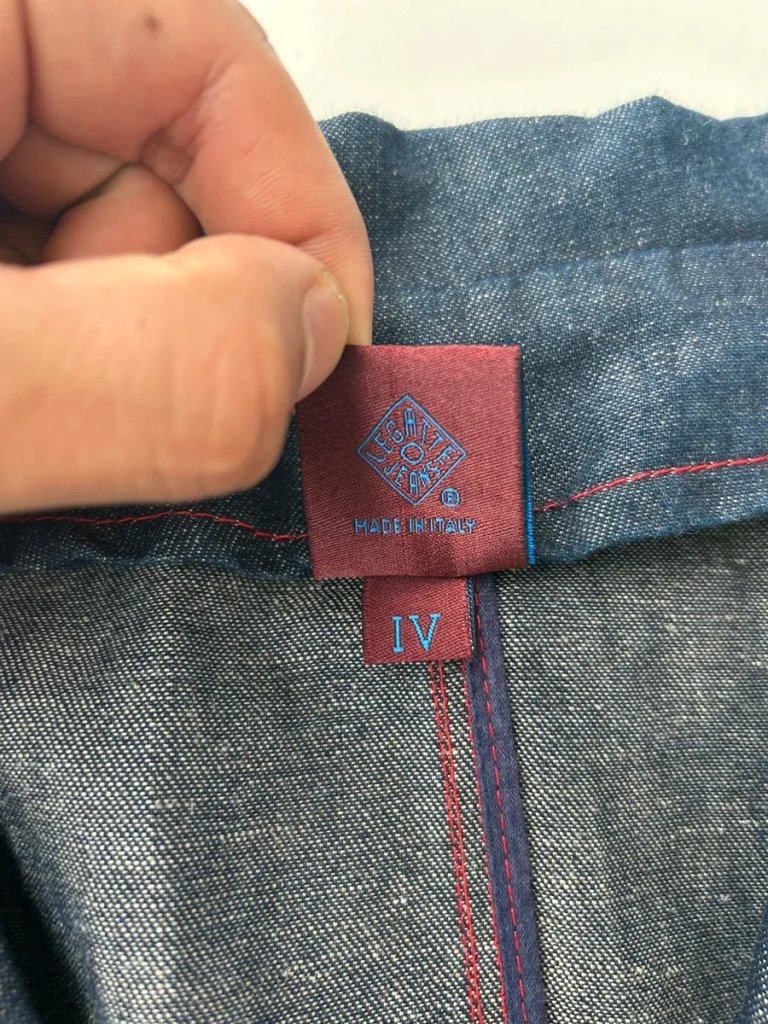
You’ve found a printed mesh dress, an embroidered pair of jeans or an asymmetric top labelled Le Gatte Jeans — sometimes written Legatte, as one word — and the name means nothing to you? You’re not alone: it’s one of those labels you often come across in vintage shops and about which almost nothing is written. We’ve separated what is established from what is simply observed.
Who is behind Le Gatte?
Le Gatte is a brand of Marco Fantini srl, a womenswear house based in Florence. According to its FashionUnited profile, the company was founded in Florence in 1985 by entrepreneur Marco Fantini and his wife Elena. The house’s official website lists Le Gatte among the brands it has created, alongside OHDD and Save The Queen!, its best-known label.
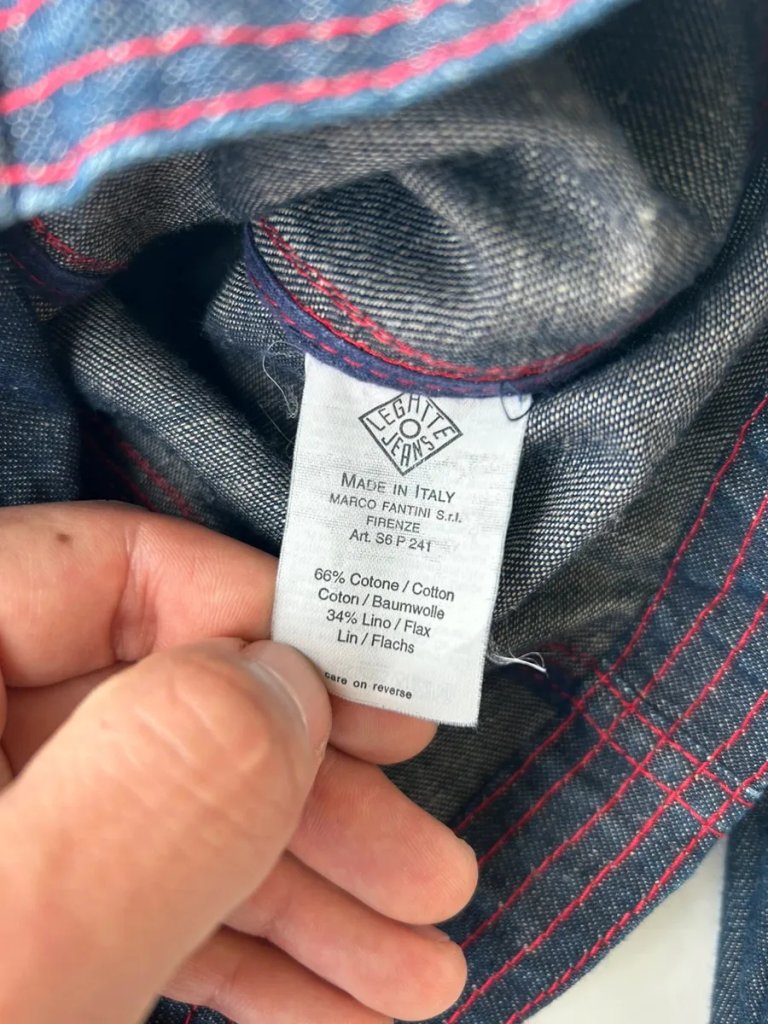
That is the key point: Le Gatte and Save The Queen! come from the same house. This is why so many resale listings describe pieces as « Legatte Jeans / Save the Queen ». The two remain distinct brands, though: the house itself says each has its own creative identity, with a shared taste for mixing references from different cultures.
The name is Italian: le gatte means « the (female) cats ».
What we don’t know
To be honest, we found no published timeline for Le Gatte. Neither when it was launched, nor when it stopped being produced, if it did. Sources don’t even agree on when Save The Queen! was born: one Italian directory says 2000, a trade-press article says 1999. So we would rather not give you a date for Le Gatte than make one up.
On the house’s current online shop, the brands featured are Save The Queen!, OHDD, Crown, StQ Man and Sun: Le Gatte isn’t among them. That suggests it belongs to the house’s past, but it isn’t proof.
The style: what we observe on the pieces
With no archive to rely on, the garments do the talking. Here is what we notice on the pieces that pass through our hands and on resale listings — to be read as observations, not as a rule:
- Printed tulle and mesh: maxi dresses, long-sleeved tops and skirts in fine mesh, covered in abstract or graphic prints;
- Asymmetric cuts: one-shoulder necklines, bias hems, side trains;
- Worked denim: flared jeans and denim jackets, often embroidered or embellished;
- A mix of materials: leather, knits, silk blends, sometimes combined in a single piece.
So don’t let the word « Jeans » mislead you: you’ll find as many dresses as denim. Resellers usually date these pieces to the 1990s and 2000s, and their look — busy prints, sheer layers, superimposed fabrics — fits that period well. But that dating rests on style, not on any document from the brand.
As for manufacturing, the house states that the raw materials and every production step of its garments are carried out in Italy, that its prints are hand-drawn and its fabrics printed in Como. These statements describe the house today; they don’t tell us how each Le Gatte collection was made at the time.
How to recognise a Le Gatte piece
- The label: look for « Le Gatte Jeans » or « Legatte Jeans ». The spelling varies from piece to piece and in the way listings transcribe it (« Le Gatte », « Legatte », sometimes even « Legate »);
- The country of manufacture: the pieces we have seen are marked « Made in Italy »;
- The size: some pieces are sized in Roman numerals (I, II…) rather than in standard sizes. One listing equates size I with an Italian 42, others with a small: these equivalences are unreliable, so always measure the garment;
- The care and composition label: on a tulle dress, expect synthetic fibres; it also tells you how to look after it, which is often delicate.
To date a pair of jeans in general, the clues lie in the construction more than in the brand; our guide to dating vintage jeans explains what to look at, even though it focuses on Levi’s.
Frequently asked questions
Are Le Gatte and Save The Queen! the same brand?
No, but they come from the same house: Marco Fantini srl, in Florence, created both. See also our Save the Queen! guide. Hence the double name so often seen in listings.
Le Gatte, Legatte, Legatte Jeans: which spelling is right?
The house writes « LE GATTE ». On labels and in listings you will also see « Legatte » and « Le Gatte Jeans ». It is the same brand.
What era do the pieces date from?
No official timeline has been published. The pieces you come across are usually dated to the 1990s and 2000s based on their style; we say so on each product page when we have a more precise clue.
Discover our vintage pieces
Pieces from this story
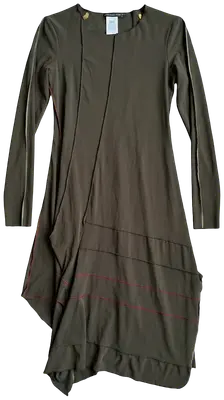 Image generated from the photo — the real photos are on the product page
Marithé + François Girbaud
Robe kaki foncé MFG
€280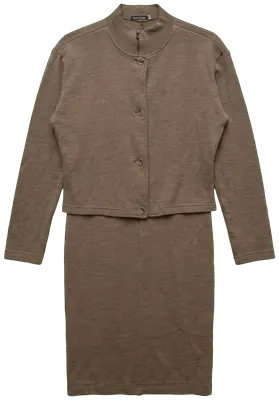 Image generated from the photo — the real photos are on the product page
Emporio Armani
Emporio Armani Vintage Dress Size M Pre-owned, in excellent condition
€180 Image generated from the photo — the real photos are on the product page
Deca
Robe longue Deca style Marithé François Girbaud
€110Read next
Discover our vintage pieces
View shop